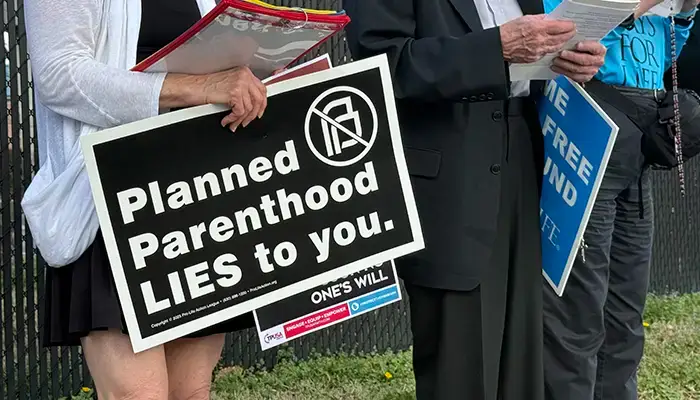
For most of my ministry and pro-life activism, my moral framework around abortion has been relatively straightforward: Abortion is the unjust taking of innocent human life, and therefore Christians must oppose it. That conviction has never wavered.
What has been more complex is how to think about the mother.
Within the historic pro-life movement, a common moral claim has been that women are primarily victims — victims of predatory men, coercive partners, manipulative industries, and a culture that treats the unborn child as disposable. Victims of a lie perpetuated by a legal system that has long said abortion is moral, acceptable, and available.
That framing carried weight for me for many years. It seemed pastorally sensitive and morally plausible. Many women do experience profound pressure, misinformation, and abandonment in crisis pregnancies. I’ve met them. Compassion, not condemnation, felt like the appropriate Christian posture.
I still believe much of that is true.
But I no longer believe it is the whole truth.
The challenge of moral agency
In recent years, the public moral landscape around abortion has shifted. Advocacy has moved beyond the language of privacy and tragic choice into open celebration.
Slogans such as “Shout Your Abortion” no longer present abortion as reluctant tragedy; they present it as empowerment, identity, and even moral good.
Some advocates openly acknowledge the reality of the unborn child and still celebrate abortion.

That matters because the category of victim assumes diminished agency — coercion, ignorance, or constraint. While those realities certainly exist in some abortion decisions, the cultural witness we now see also includes women who knowingly and intentionally choose the death of their unborn child.
Any moral framework that cannot account for that reality is incomplete.
Acknowledging moral agency does not deny that many women suffer, are pressured, or later experience grief. Nor does it erase compassion. But it does mean the older pro-life habit of describing all women as victims is no longer morally sufficient.
Some are victims. Some are not. Christian moral reasoning must be able to speak truthfully about both.
Equal protection and the unborn
This question becomes unavoidable in the current legislative debate in Tennessee. Proposed legislation — House Bill 570 and Senate Bill 738 — seeks to apply equal protection under the law to unborn children.
If the unborn child is a human person — and both Christian theology and modern science affirm that reality — then justice would require the same legal protection afforded to every other innocent human being. That is simply the logic of personhood.
The tension emerges in what equal protection entails. In criminal law, protecting victims normally includes accountability for perpetrators. These bills therefore include potential criminal liability for a mother who seeks or procures an abortion.
Historically, the pro-life movement has resisted this idea, arguing that women should never be prosecuted because they are victims. But if some abortion decisions involve genuine moral agency — and it increasingly appears that they do — that categorical exemption becomes harder to justify.
Justice and mercy are not opposites
Christians instinctively recoil at the idea of criminalizing mothers, and not without reason. The pastoral realities surrounding abortion are severe: trauma, coercion, fear, abandonment, poverty, and confusion. The gospel calls the church to meet such women with grace, restoration, and tangible support.
Yet Christian moral theology has never treated agency and compassion as mutually exclusive. Recognizing moral agency in some abortion decisions does not require cruelty, nor does it diminish the church’s obligation to pursue repentance, healing, and restoration.
Compassion does not require us to deny moral reality. True compassion requires honesty about it.
A hard but honest place
So where does this leave me?
I remain persuaded that many women seeking abortion are deeply wounded and pressured. The church must never treat them as enemies. We are called to be the safest place in the world for a woman facing a crisis pregnancy or post-abortion grief. But I can no longer say without qualification that women are always victims and never moral agents in abortion. The cultural and moral evidence simply does not allow that claim to stand unexamined.
This tension is real. Compassion and accountability rarely exist in perfect proportion, and criminal law is often a blunt instrument in profoundly human tragedies.
Christians cannot resolve moral tension by denying one side of it. If the unborn child is truly a human person, equal protection cannot be only a slogan. It must mean that every human life bears equal moral weight before God. B&R — Chris Garner is lead pastor of Holly Grove Baptist Church, Bells.